
Mathilde de Laâge
Mathilde de Laâge
*
Mathilde de Laâge *
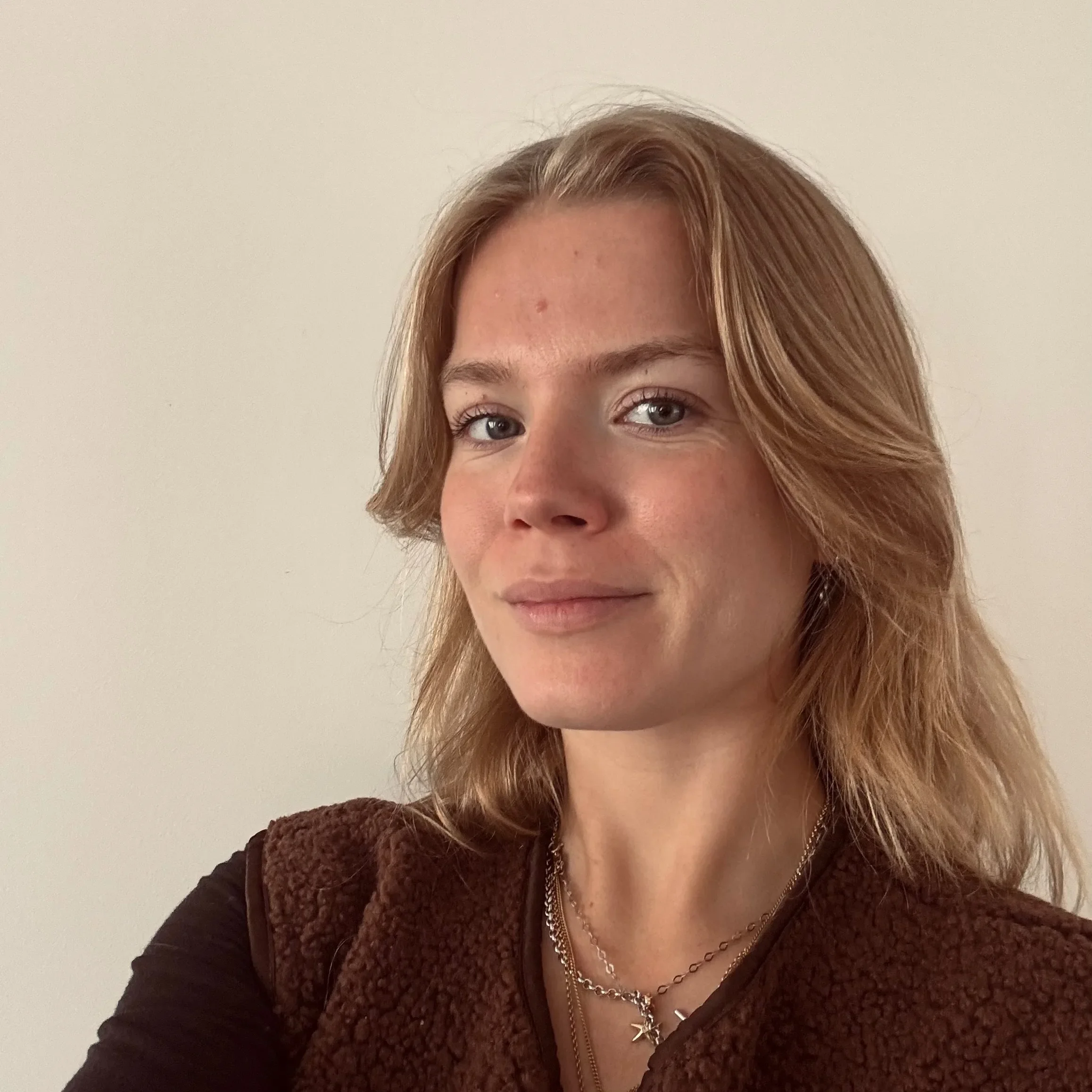
Meet Mathilde
Mathilde’s experience spans working on yachts near the Great Barrier Reef to driving agile transformation within a global fintech. Adaptable and thoughtful, she consistently steps into the unknown. Her journey reflects bold decisions, international growth and a mindset shaped by curiosity and change.
Your Vizzy shows an impressive commitment to learning through experience. From detailing yachts near the Great Barrier Reef to working in a professional kitchen in Australia. What have these experiences taught you about adaptability and personal growth?
Travelling through Australia in 2024 pushed me into jobs I never imagined I would do. And that was exactly the point. I had gone to the other side of the world, bought a 2002 Toyota Prado with an absurd number of kilometres on it (that somehow survived 22,000 more, with a few repairs), and decided to figure life as it came, embracing every opportunity and challenge it threw at me.
Those experiences taught me more about adaptability than anything I had done before. First by marketing myself for roles I had zero experience in and then picking up new skills fast. In Melbourne, I once turned a trial for a barmaid position into a successful shift behind the bar, mastering confidence before experience.
Working in a chef’s kitchen specifically, I learned to think fast, anticipate needs, communicate clearly, and let go of the illusion of control: you don’t plan your day in a kitchen, you respond, you adapt, and you keep going.
Working in boating also meant entering a male-dominated environment, where I had to set clear boundaries to be respected. I discovered how confident and grounded I can be when I choose
to stand up for myself.
And above all, I realised how much I enjoy being a “360° talent”: client-facing, operational,
relational, and able to adapt to completely different contexts.
These life and work experiences made me braver and more resourceful. I will carry that with me in everything I do.
While working as an Agile Culture Transformation Specialist, you helped teams become more open and collaborative. What did that teach you about inspiring people to work towards a shared goal?
The breakthrough for me was understanding that the real challenge is not task execution but creating true engagement around a shared goal people genuinely want to impact. For me, that’s what separates a performing team from a high-performing one.
As an Agile Coach at Swift, I worked with cross-functional teams made up of software engineers, quality experts, analysts, and product owners. We all brought different knowledge and skills, and that diversity led to stronger ideas, better solutions, and real value for our stakeholders.
But reaching that point of open collaboration and engagement does not happen by chance. Here’s what I have observed:
At the organisational level, you need a system that allows people to experiment, fail safely, learn fast, collaborate, and even have fun. Leadership plays a huge role in creating these conditions for success, shifting from control to unlocking potential. At the team level, people need to reconnect to why their work matters. Clear outcomes and ownership fuel motivation, and when purpose fades, creativity fades with it. And at a personal level, you must go first. You cannot expect teams to embrace vulnerability, curiosity, or experimentation if you are not modelling it yourself.
For me, that meant showing up with humility, consistency, and accountability. It meant building trust over time, celebrating progress (and failures too), and navigating disagreements with empathy.
Throughout my career so far, I have been lucky to work in environments that let me try, fail, learn, and grow. I am grateful to the leaders and colleagues who made that possible because it helped me create that space for others.
Those years taught me how powerful yet challenging it is to ignite true engagement and commitment around a shared goal. It is something I want to keep embodying because everything starts with you, right?
Looking back at your time at The University of Exeter, what experiences, projects or people helped shape your outlook and the path you’re on now?
Moving to the UK at 18 was a bold choice I did not fully measure at the time. I was French, had only learned English at school, and suddenly I found myself studying full-time in a completely different academic system and culture.
Here are a few things that stayed with me from my time at Exeter:
University taught me how to learn differently: to question, to analyse, to build a critical mind instead of just absorbing information. It was also the first place where I realised that the only constant in life is change, and that I wanted to become really good at navigating it. I still remember my third-year course on “Leading Change in Practice”, understanding how people adapt and evolve.
But more than the academics, it is the environment that shaped me. I was surrounded by people from all over the world, making friends studying in different fields and I loved every second of it. It made me value diverse perspectives, for your ideas get stronger when they are challenged, questioned, and enriched by others.
Looking back, Exeter did not give me a linear direction it gave me the mindset to stay curious, stay open and stay in motion. And perhaps most importantly, it showed me that when you set a bold goal, like becoming bilingual, or finding your place in a foreign environment, you can achieve far more than you think. And that’s priceless to me.
Many grads struggle to figure out their direction early on. What advice would you give to someone who wants to build real experience and stand out, even if they’re not sure where they’re heading yet?
The first thing I would say is: don’t stress about having a perfectly defined path. Careers are rarely linear, mine definitely is not. When I was studying at Exeter, I had no idea I would start my career in fintech, let alone in the cybersecurity department. And yet, saying yes to what sparked my curiosity opened doors I did not even know existed.
My advice? Follow your curiosity. Try things. Volunteer. Reach out to people, on LinkedIn, at events and conferences, on the train, or at a cafe if you are bold enough! Ask for their stories. Create opportunities and take them, even if they feel slightly random, and especially if they stretch you.
Every experience gives you data about yourself: what energises you, what drains you, what environments make you grow. That data becomes your compass when your “North Star” is not visible yet.
Even today, I still open new doors, explore new industries, and connect dots from different worlds. You must trust the process. Your direction will not come from thinking, it will come from trying. And you will stand out by being curious, proactive, and brave.
You recently volunteered at UNLEASH World, a leading HR tech conference. What did the experience teach you about where the world of people and technology are evolving?
Volunteering at UNLEASH felt like standing at the crossroads of people, organisations, and the future. I am part of a generation that grew up with technology, but what’s coming next with AI is on a completely different scale. You could feel the excitement around everything it will unlock: faster problem-solving, deeper insights, new creativity, and breakthroughs in healthcare, education, research, hiring, and beyond.
But the conference also reminded me of something essential: technology is just a tool. And like any tool, its impact depends entirely on how intentionally we use it.
For me, that intention shows up in three ways that are deeply connected:
1 - Clarity before innovation: Tech only creates value when we truly understand the problem we are trying to solve, and the root causes behind them. At UNLEASH, the leaders who stood out to me were the ones starting with purpose, not hype.
2 - Protect what makes us human: I just finished reading Cyberpunk, a book by the political scientist Asma Mhalla looking at how technology is reshaping power dynamics, and it shifted my lens completely. It made me realise how essential it is to protect and strengthen our human mind: our focus, judgment, creativity, empathy. As the researcher and author Brené Brown recently shared in a podcast, you need to own your mind, your attention, your presence. If you don’t, algorithms will happily own them for you.
3 - Innovation must stay accountable to the planet. We cannot ignore the environmental cost of technology. Data centres are energy-intensive, and we need to be bold in balancing innovation with sustainability. It is something I feel genuinely concerned about, even if I sometimes feel limited in how much I can influence it. I try to do my part, as I did in November by sensitising young people to climate challenges at a science and society forum. For me, the future of people and technology is a paradox: AI will free up time and unlock potential, but what we do with that freedom is still, and will always be, a human choice. And that choice will define the society we build.
Your love for skiing, travel, and the outdoors really shines through on your Vizzy. How do those things help you reset or bring fresh perspective to your career?
There is a lot happening in my head. I am constantly absorbing and connecting ideas, so I need strategies to slow my mind down.
The outdoors helps me reconnect with myself and release energy. I particularly enjoy being in the mountains, skiing or hiking. Travels on the other hand, widens my perspective. New environments challenge my assumptions, and I always return more grounded, more creative, and better able to see things from multiple angles.
And finally, what’s next for you? What kind of opportunities are you most excited to explore in the near future?
I‘m excited to step into roles where I can bring together my strengths in creative project management, communication, and coordination: designing meaningful experiences, structuring complex projects, and collaborating with diverse teams and partners.
I’m particularly drawn to communications roles and agencies for the breadth of missions, clients, and storytelling challenges they offer, while staying open to other industries and environments that value creativity. Over the longer term, I am keen to contribute to projects that promote art & culture.
What matters most to me is working in dynamic, multicultural contexts where ideas turn into impact, and where curiosity, positive energy, depth, and human connection drive the work. Above all, I want to keep learning and stretching myself.